Saturday, 23 May 2015

Hilton Schilder :: Rebirth (2015)

Composer and multi-instrumentalist Hilton Schilder was born into a musical family in Lotus River, Cape Town. He is the son of esteemed South African jazz pianist Tony Schilder (1937-2010) and nephew of Ebrahim Kalil Shihab (formerly Chris Schilder) of Cape Town’s groundbreaking jazz-fusion group of the 1970s Pacific Express. He was given his first instrument in the form of a drum at the age of three.

Hilton’s musical trajectory has taken him through a variety of groups and collaborations in the capacity of both a composer and a performer. He partnered with Mac McKenzie in the mid-80s to form the Genuines, a rock outfit that channelled the folk music of the Cape through punk. The band’s first two releases on the Shifty label tethered them to the broader Voëlvry movement and cemented their legacy in the history of South Africa’s alternate music scene.

Post-Genuines, Hilton immersed himself into jazz and was a member and contributing composer to Robbie Jansen’s Sons of Table Mountain. In the early 2000s, he performed with the Goema Captains of Cape Town and released his first solo album entitled No Turning Back on Mountain Records in 2003. He was the project leader of the South African and Swiss collaborative jazz ensemble Iconoclast in 2008.

In 2010, Hilton fought cancer and lost a kidney in the process. While in hospital, he heard what would become the composition “Rebirth” during a morphine-induced lucid dream. Waking up bedridden and without access to an instrument, he memorised what he could recall of the piece by imagining a piano keyboard on the ceiling.

“Rebirth” is a spiritual masterwork by a seasoned musician at the height of his powers - a sonic journey of sweeping light and shade that is both personal and universal in the depths it traverses. The piece is issued over two sides of a vinyl 7-inch single in a sleeve featuring Schilder’s distinctive ink drawings and is also the title track of a solo piano album.

Hilton Schilder - Rebirth (2015)
1. Rebirth
2. Tesna Part 15
3. Birsigstrasse 90
4. Tesna Part 5
5. The Art of Flying


Hilton Schilder Selected Recordings 2003-2009

Thursday, 30 April 2015

Hilton Schilder :: Birsigstrasse 90 Live


Hilton Schilder performing at "The Night of the Schilder" in Cape Town on 16 April 2015. The event at Loop Street's Eye marked the 7-inch vinyl release of the single "Rebirth" from the eponymous solo-piano album. This surprise pop-up performance accompanied a listening party that took in Schilder's back catalogue (Genuines, Goema Captains, Hilton Schilder Group, RockArt, All In One) and included recordings by his father Tony (Tony Schilder Trio) and uncle Ebrahim (Chris Schilder Quartet, Pacific Express). "Birsigstrasse 90" appears on the Rebirth album and was composed at the song's namesake address in Basel, Switzerland.

Friday, 30 January 2015

Sathima Benjamin :: Africa (Hilton Schilder Trio)


Sathima Bea Benjamin performing "Africa" with the Hilton Schilder Trio on 1 May 2013. Benjamin's appearances in Cape Town in mid-2013 culminated in a string of celebratory events in July that marked the South African launch of the reissue of her 1976 album African Songbird and included a performance at Tagore's Jazz Bar and a screening of the film Sathima's Windsong at the Labia Cinema. Her magnus opus "Africa" was recorded for African Songbird following her return to South Africa after a long period abroad. The Soweto Uprising of 1976 precipitated a second period of exile in which she lived in New York City for 34 years. She returned to the city of her childhood in 2011, making Cape Town her home once again until her death at the age of 76 on 23 August 2013.

Thursday, 15 January 2015

Sathima Benjamin :: Music (Cape Town Goema Orchestra)


Shaken by the Soweto Uprising in 1976, jazz singer and composer Sathima Bea Benjamin left South Africa in 1977 with her then-husband Abdullah Ibrahim (Dollar Brand) and settled in New York City for 34 years. She returned to the city of her childhood in 2011, making Cape Town her home once again and continuing to perform until her death at the age of 76 in August 2013. She appears here on 8 December 2012 in the first of a pair of performances with the Cape Town Goema Orchestra. Written by Benjamin, the spiritual ballad "Music" was recorded for her canonical African Songbird album in 1976 and revisited for LoveLight on Benjamin's own Ekapa label in 1987. The composition was arranged for orchestra by conductor George Werner.

Monday, 1 July 2013

Cape Town Celebrates Sathima :: 13, 14 & 16 July 2013

South Africa’s inimitable jazz vocalist and composer Sathima Benjamin returned to Cape Town in 2011 following 34 years in New York. Benjamin and former husband Abdullah Ibrahim moved to the United States with their two children in the wake of the 1976 Soweto Uprisings. Their relocation effectively became exile as the apartheid government revoked their citizenship for participating in cultural work for the liberation movement. This month, Cape Town celebrates Sathima Benjamin’s homecoming with series of events that include a live performance, a film screening and lots of great music.

Saturday 13 July 2013 :: African Songbird Relaunched
Recorded in the year preceding her departure from South Africa in 1977, African Songbird was Sathima Benjamin’s debut release and a canvas for her own compositions. Unavailable for over three and a half decades, June 2013 saw the release of Matsuli Music’s reissue of the landmark Afro-jazz long-player on vinyl, CD digipak and digital-download formats. To mark the occasion of the album’s relaunch, Sathima Benjamin & The Hilton Schilder Trio will perform at Tagore’s Jazz Bar on the evening of Saturday 13 July. The performance will be streamed online via Pan African Space Station Radio.

Sunday 14 July 2013 :: Sathima’s Windsong Film Screening
This 2010 film-portrait of jazz vocalist Sathima Benjamin traces her musical journey from Cape Town to New York City via an astonishing morning in a Parisian recording studio with Duke Ellington in 1963. A reflection on displacement, exile, longing and belonging, Sathima’s Windsong premiered at Cape Town’s Encounters International Documentary Film Festival in 2010 (Runner-Up Audience Award). This one-off 6.15pm screening at the Labia-on-Orange on Sunday 14 July sees filmmaker Daniel Yon and Sathima Benjamin in attendance for Q&A.

Tuesday 16 July 2013 :: Future Nostalgia Spins Afro-Jazz Classics
Cape Town’s vinyl enthusiast collective Future Nostalgia dedicates a night to classic South African jazz from African Songbird to Underground in Africa on Tuesday 16 July. Recordings from the As-Shams label are sure to abound as Matsuli Music’s Matt Temple takes a guest slot on the decks. Future Nostalgia gatherings are held every Tuesday at the Mahogany Room from 8pm.


Sathima Benjamin & The Hilton Schilder Trio
O’Driscolls, Cape Town (May 2013) | Photos © Calum MacNaughton

Friday, 18 January 2013

Derek Gripper :: Jarabi (Toumani Diabaté)


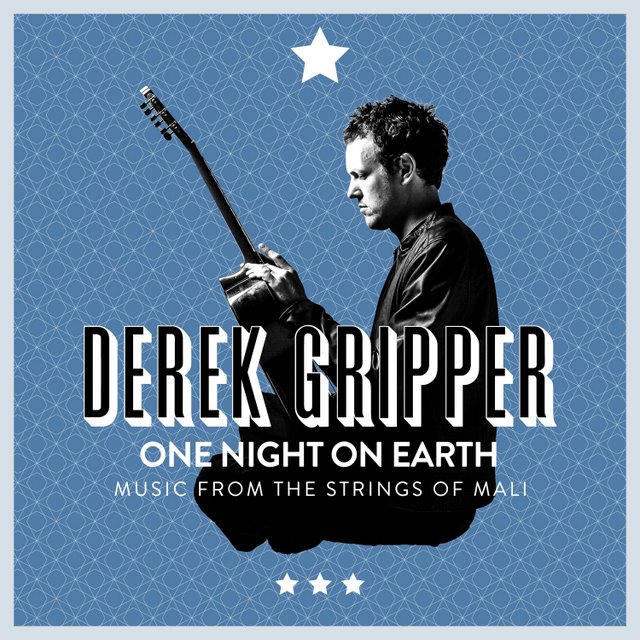
Derek Gripper’s arrangement of Toumani Diabaté’s “Jarabi” at the Long Street Slave Church in Cape Town (May 2012). This performance sees a 21-string kora composition from Mali finding its expression on a six-string classical guitar at the same venue in which Diabaté performed in 2009. Gripper’s work as a “translator” of the West African kora appears on his 2012 album One Night on Earth: Music from the Strings of Mali, which is available from New Cape Records on Bandcamp.


Tuesday, 8 January 2013

Hilton Schilder :: Selected Recordings 2003-2009


Music video for "Narrow Escape" featuring Hilton Schilder on vocals. Since his tenure with the Genuines from 1986 to 1993, Hilton Schilder has assembled a rich and eccentric solo and collaborative discography. Here are some selected recordings to seek out and investigate:

The Hilton Schilder Group - No Turning Back (2003)
1. No Turning Back (H. Schilder)
2. For Tony (H. Schilder)
3. Cole (H. Schilder)
4. Mr. Cool is in the Lounge (H. Schilder)
5. Tone Nails (H. Schilder)
6. View from the Top (H. Schilder)
7. Why? All this Time (R. Jansen)
8. Red Rock City (G.S. McKenzie)
9. Patricia (H. Schilder)
10. Tesna (H. Schilder)
11. Email to the Ancestors (H. Schilder)
12. Why? Come on World (R. Jansen)
RockArt - Future Cape (2006)
1. Oom Jaap Jaap se Stamboom (H. Schilder, A. van Heerden)
2. Nuwestraat (H. Schilder, A. van Heerden)
3. Groovy Groovy (H. Schilder)
4. Russel (H. Schilder)
5. Changes (H. Schilder)
 6. Fourth Eye (H. Schilder, A. van Heerden)
7. Bitterlewe Intro (H. Schilder)
8. Bitterlewe (A. van Heerden, A. Bongelo)
8. Feeling Like a Stranger (H. Schilder)
9. Ladies' Night on Car-Atom (H. Schilder, A. van Heerden)
10. Druiwepiek (H. Schilder)
11. Bitterlewe Live (H. Schilder, A. van Heerden, A. Bongelo)
The Iconoclast - Live at the Bird's Eye (2008)
1. Sweet as Hani (H. Schilder)
2. Langarm (R. Ekes)
3. Homer (H. Jephtah)
4. Cuba Castro (H. Schilder, N. Scalliet)
5. G's Tension (G. Beuerle)
6. Pang Salie (H. Schilder)
7. St. Lucia Draai (H. Jephtah)
Hilton Schilder - Live at Bridgetown (2009)
1. The Healing (G.S. McKenzie, H. Schilder)
2. Elements of Surprise (H. Schilder)
3. Tesna 5 (H. Schilder)
4. Mammie 1 & 2 (H. Schilder)
5. Tesna 3 (H. Schilder) 


(See Rebirth for 2015 recording)

Wednesday, 5 December 2012

Goema Orchestra :: South Atlantic Suite & Guest Composers


The December 2012 edition of the Cape Town Goema Orchestra showcases an expanded version of McKenzie’s “South Atlantic Suite” (which premièred in September 2012) as well as new orchestral works by Ana Strugar, Maxim Starcke, Reza Khota and Keenan Ahrends. December’s line-up also sees the exciting addition of jazz legend Sathima Bea Benjamin.

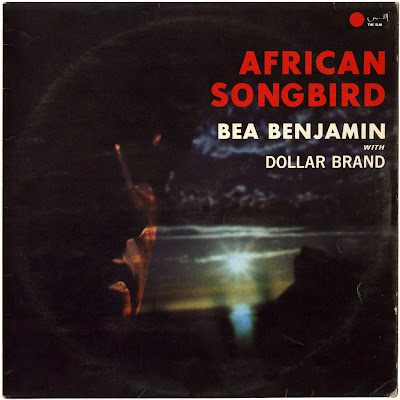
With paternal roots on the South Atlantic island of Saint Helena, Sathima Benjamin is a fitting guest at the orchestra’s Saturday evening performances (7.30 for 8pm on 8 and 15 December at the SABC Studios Auditorium in Sea Point). Benjamin, who returned to Cape Town in 2011 after 34 years in New York, will perform her poignant compositions “Africa” and “Music” (arranged for the orchestra by George Werner). Both of these titles appear on Benjamin’s African Songbird LP of 1976, which is being prepared for reissue in 2013 by Matsuli Music.

Saturday, 1 December 2012

Hilton Schilder :: The Wikkelspies


Hilton Schilder is known for embracing digital technology as evidenced by his electronic work with Alex van Heerden (1974-2009) under the RockArt moniker. He is also no stranger to exploring the sonic potential of ancient instruments hewn from wood and wire, which he dubs "single-string technology." Pushing the invisible frontiers of tradition, Schilder partnered with bow craftsman Bien Petersen to develop the Wikkelspies (or “shake-spear” as he cunningly translates its Afrikaans name). A flat board with seven spring-mounted mouth bows arranged in parallel, the device rests on the player's lap while strings are struck by sticks and the board is shaken with the knees. "This is the only instrument in the world like this. We invented it 6 months ago," says Schilder demonstrating his creation on a pop-up stage in front of Cape Town's National Museum in September 2012.

Thursday, 27 September 2012

Derek Gripper :: ’56 (Ali “Farka” Touré)


Derek Gripper launched the “digital” version of One Night on Earth: Music from the Strings of Mali at the South African Slave Church Museum in May 2012. Playful yet poignant, the album sees the unprecedented arrangement of 21-string West African kora music on six-string classical guitar, exploring the compositions of Mali’s Toumani Diabaté (who performed at the Slave Church in 2009). The album also features Ali “Farka” Touré’s “’56,” which is derived from a Guinean revolutionary song. From Conakry to Timbuktu to Cape Town, “’56” speaks of music’s ability to shrink time and space, uniting three seemingly disconnected African states and, coincidentally, a period of 56 years, into a single performance. Night on Earth is being released on CD this month and is available from New Cape Records on Bandcamp.

Monday, 17 September 2012

Goema Orchestra :: Agent of Connectivity

For this month’s pair of Cape Town Goema Orchestra performances, I presented an update on Mama Goema and drew attention to the broader activities of the goema "movement.” I touched on the theme of connectivity and the idea of forging an global sound for the 21st century. We acknowledged special guests Bongiwe Lusizi of Mthwakazi, who saw the show on 8 September, as well as jazz-giant Sathima Benjamin, who attended the 15 September performance. This is how it went:

My involvement with the Cape Town Goema Orchestra began in 2010 with Goema Symphony No. 1, the “happening” that features in the film Mama Goema, which premiered in Cape Town last year. I’m pleased to report that the film was voted best documentary feature at the Tri Continental Film Festival in 2011 and has, to the merit of those in and behind the scenes, reached audiences in Portugal, Colombia, Canada, Switzerland and Scotland.

Over the last couple of years, I’ve been asked countless times what the film is about. I used to brush these enquiries off by saying that it’s about Cape Town music. If I’m feeling mischievous, I might say it’s about a shape-shifter from Pleiades who comes to Earth as a punk rocker, reinvents himself as a jazz cat and then decides to be a composer of symphonies. If I have time, I say it about goema and spend the next three hours unravelling what the film does more efficiently in 55 minutes.

Nowadays, I'd propose that the film about connectivity and that goema is what connectivity sounds like. We used up all the “ubuntu” during the Madiba Years and we had a good time but now we’re into this stuff that grows in Cape Town. And it’s addictive. But it’s good for you. And what is Cape Town if not an agent of connectivity on the planet. It’s no coincidence that East meets West in Africa in Cape Town. And no coincidence that what started as Goema Symphony No. 1 in 2010 became Table Bay Concerto in 2011 in is now adrift with the South Atlantic Suite on route to Mali, Serbia and the Eastern Cape tonight, consciously evoking a goema of the 21st century. You can always detect that familiar homecoming sound but tonight’s programme marks goema’s most challenging, expansive and inclusive move ever.

And so, as we look at where we are now, we see Kyle Shepherd connecting with Japan, Ernestine Deane connecting with Germany, Hilton Schilder re-connecting our youth with the music of the bow. We see Achmat Sabera on a South African postage stamp and a Sabera “gummy” on every single continent on the planet. A Goema Roadshow, featuring Hilton Schilder and Achmat Sabera, visited 10 schools from Newlands to Mitchell’s Plain over the last three weeks reminding over 600 learners what Cape Town connectivity sounds like. We also celebrate the third season of the Goema Orchestra with an EP dropped into cyberspace in the hopes that it will reach the hearts via the ears of listeners around the planet.

Photo © Steve Gordon

Thursday, 30 August 2012

Goema Roadshow :: August 2012

Learners show off their moves as the Goema Roadshow reaches Fairmount Secondary

A goema “roadshow” is visiting schools in and around Cape Town as the third season of the Cape Town Goema Orchestra draws near. The multimedia road-show presentation introduces learners to the music of Cape Town through the lens of diversity, unravelling the myriad of cultural influences that have given the Cape a unique language, unique food and a unique musical flavour. Learners are not only reminded of our city’s living musical traditions in the form of the Klopse, Malay Choirs and Christmas Bands but also get to see how contemporary artists have taken inspiration from the streets to produce Goema Rock, Cape Jazz and even a Goema Orchestra.

Joining the roadshow is Hilton Schilder, the multi-instrumental innovator associated with legendary Cape Town groups such as the Genuines, the Goema Captains, the Sons of Table Mountain, RockArt and, most recently, All In One, his acoustic super-trio with Errol Dyers and Steve Newman. A skilled bow player, Schilder also promotes “single-string technology,” demonstrating that beautiful music can be created with simple, ancient tools. Also present is Achmat Sabera, the Cape music instrument artisan whose “gummies” and tambourines are widely regarded as the best on the street. Sabera takes learners through the arduous drum-making process, a skill that Cape Town is in danger of losing as cheap, mass-produced instruments flood the market.

The goema roadshow comes just weeks before the third concert season of the Cape Town Goema Orchestra under the auspices of composer Mac McKenzie. A leading exponent of contemporary forms of goema, McKenzie launched the orchestra in 2010 with “Goema Symphony No. 1” and “Table Bay Concerto” followed in 2011. This year, McKenzie presents a work entitled “South Atlantic Suite” and shares his platform with guest composers Chantal Willie, Ana Strugar, Derek Gripper and Mandla Mlangeni.

A brave learner at South Peninsula High School demos the !xaru

Achmat Sabera's "gummy" workshop at Plumstead High School

Hilton Schilder's bow performance at Grassdale High School

Special thanks to Ruschka Jaffer of the Bright Star Programme (project coordinator), Iain Harris of Coffeebeans Routes (logistics), roadshow stars Achmat Sabera & Hilton Schilder and, of course, the inspiring teachers and enthusiastic learners of Cape Town.

Thursday, 23 August 2012

Searching for Sugar Man :: Original Soundtrack (2012)


If you’re drawn to the vitriolic dimension of Rodriguez’s 26-song opus and are tracking reactions to Searching for Sugar Man, you’re probably tempted to respond to the media blitz with a pinch of cynicism. A Wikipedia entry, tweets and a rash of Facebook pages? Tick. Official merch and top-dollar eBay memorabilia? Affirmative. Bandwagoning and profiteering? Maybe, but who the fuck cares? Certainly not Rodriguez. “Fame is fleeting,” is the cold fact that he drops on CNN (video below). It’s his highest profile interview ever. His star has never shone brighter. Yet he responds with an air of cultivated detachment. This is not the man who wrote those songs 40 years ago. He’s even wiser.

And as for the unfortunate “Hispanic Dylan” tag that accompanies most mainstream commentary about Rodriguez, perhaps it’s best to identify the truth in it. While “Dylanesque” has come to describe any guitar-strumming singer-songwriter with a taste for poetry and irony, there are certainly Dylan and Rodriguez songs that make great companions. “Sugar Man” speaks to “Tambourine Man” while “Establishment Blues” sits comfortably next to “Subterranean Homesick Blues.” “Forget It” and “It Ain’t Me Babe” are both table-turning reactions to being dumped and “Like Janis” and “Like a Rolling Stone” see Rodriguez and Dylan at their most vividly scornful.

As for Rodriguez’s Hispanic credentials, it’s hard to tell. His strumming technique definitely betrays shades of Mexico but he certainly doesn’t lean on Latin pop sensibilities and is unlikely to ever be anthologised alongside troubadours like Trini Lopez or José Feliciano. More useful are parallels with the work of Leonard Cohen (stick on “Cause” and “Suzanne” in rapid succession) or Lou Reed (the same characters of “Most Disgusting Song” inhabit “Walk on the Wild Side.”) Add Rodriguez (Detroit) to Reed (New York) and Bukowski (Los Angeles) and you can trace the coast-to-coast, downtrodden, urban fallout of Hunter S. Thompson’s wave that broke and rolled back at the end of the 1960s.

All this in lieu of a legitimate review of the Searching for Sugar Man soundtrack. Suffice to say that this compilation is the most astute way of packaging “the best” of an artist who has only released two albums. It’s a combination of songs from both Cold Fact and Coming from Reality with a trio of non-album singles to boot. In short, if you’re certain you’ll only ever be satisfied with one Rodriguez album, this is your best bet. And if what you’ve already got was released before the “Dead Man” tour, you could do worse than support a remastered playlist that Rodriguez will get a cut from. Who knows, insomuch as it describes itself as an “original motion picture soundtrack,” there may even be room for an Oscar nomination if Sony Legacy can bend the “written specifically for a film” rule. One glaring omission, however, is a track or two from his South African concert album Live Fact. Although a rusty Rodriguez fronts a makeshift local backing band, his 1998 tour is central to the film and his interaction with the crowd and “thanks for keeping me alive” quip are golden.
 

Thursday, 26 July 2012

Sugar Man :: Bigger than the King, Stones, Beatles & Batman


You’ve heard every story there is to tell? How about this one? A Swedish guy makes a documentary in 2012 about a 1970s folkster from Detroit who returns from obscurity after discovering that he has a large, devoted audience in South Africa. The film culminates in a cathartic 1998 concert marking the musician’s first significant performance in 27 years to an audience who thought that he had died. The film is critically acclaimed and makes big waves in the US and the UK but, and here’s the rub, nobody in South Africa knows that it exists.

The real magic of the Rodriguez “story” (which belongs to different a dimension to the content of his two albums, which I’ll cunningly abbreviate as Fact and Reality) is that it continues to deliver delicious ironies. As such, perhaps its fitting that the dramatisation of this story should see its SA “preview/première” in the margins of the Durban Film Festival after taking the rest of the world by storm. Nevertheless, that the story is being well received abroad is cause for celebration in South Africa insomuch as we're paying dues for 30 years of Cold Fact sales that didn’t include Roriguez in the value chain by playing a role in launching a music career that slid below the US stardom radar in the 1970s.

Truth be told, Rodriguez is currently on his third resurrection. The “Rodriguez Alive” tour in Australia (yes, they also thought he was dead) marked his first circa 1979 through 1981. The second began with the first appearance of Cold Fact on CD in South African in 1991, taking in the release of Coming from Reality (mistakenly identified as his lost debut) in 1996 and ending with his “Dead Man” tour in 1998. The trilogy concludes with the first CD release of Cold Fact in the US in 2008 and features the world première of Searching for Sugar Man at Sundance in January 2012, where it was quickly snapped up by Sony Pictures Classics. In short, there’s room for a prequel and a sequel. Any (more) musicologist detective (filmmakers) out there?

Oh, and by the way, the story of  the other “honorary” South African album, Paul Simon’s Graceland, also premièred at Sundance this year in the form of Under African Skies. As Cape Town vinyl expert Steven Segerman surmises, Simon & Garfunkel’s Bridge Over Troubled Water (1970),  which appeared about a month before Cold Fact and went on to become the world’s best-selling album for the next two years, was responsible for stealing the thunder from everything  that folk-rock dropped in its wake. Yet, 40-odd years down the line, Simon and Rodriguez share their stories on the same film festival platform with both Graceland and the Searching for Sugar Man Original Soundtrack rubbing elbows in the Sony Legacy Recordings catalogue. “These are the days of miracles and wonder” indeed, to quote the closing words of the Searching for Sugar Man trailer, which inadvertently quotes Paul Simon’s “Boy in the Bubble” from Graceland. Just a weird song title randomly inspired by a trip to 1980s South Africa? Take another look at the cover of Cold Fact. Curiouser and curiouser.


Sunday, 22 July 2012

At DIFF :: Searching for Sugar Man

Searching for Sugar Man | Malik Bendjellou | Sweden, United Kingdom | 2012 | 85min


Many attempts have been made to dramatise the incredible shift in global consciousness that came about when the Internet started performing its magic in the mid-90s; when we discovered ourselves across time and space and realised that we were seeing ourselves in each other’s songs; when fiction was replaced by facts that were better than fiction. Few of these attempts can match the true story of an artifact that lost contact with its mothership and was orphaned on a distant planet where it stirred and amused the locals and provoked fantasies about its unknown origin until a technology was devised that would open a line of contact with its creator and reconcile imagination with reality.

Distilled as such, Malik Bendjelloul’s Searching for Sugar Man (2012) is a documentary about our addiction to stories and the deep satisfaction that narrative patterns and peculiarities provide. The music of Rodriguez forms the tingling spine of the film but its overarching genius lies in the fact that Sixto Rodriguez is the “MacGuffin” of his own tale and has little to add when the yarn finally catches up with him. Rodriguez occupies the eye of a storm of intrigue, commentary and enquiry and then lopes through the Detroit snow with his mystery as intact as the crystal-ball apparition on the cover of Cold Fact.

Searching for Sugar Man is a beautifully crafted and emotionally evocative addition to Rodriguez lore and one that, given its success at Sundance 2012, seems set to finally and deservedly embed Cold Fact and Coming from Reality (released on CD in the US for the first time in 2008 and 2009) in the consciousness of his homeland. In addition to introducing the songwriter’s three daughters, the film features Detroit and London collaborators as well as Cape Town’s Stephen Segerman, Mabu Vinyl purveyor of sonic delights and a key cog in the strange mechanism that brought Rodriguez back from the dead and onto a stage in Belleville in 1998.

Friday, 20 July 2012

Hilton Schilder & Friends :: Padskou Jam


Hilton Schilder and Bien Petersen with guest Tony Cedras at iBuyambo Music & Art Exhibition Centre in Cape Town. This jam combines cajon, bows, trumpet and voice and sees Schilder workshopping an experiment in what he describes as “single-string technology” for his Wikkelspies Padskou. Plans to take this travelling bow show on the road are being conceived and will include the unveiling of a new instrument designed by Petersen and Schilder dubbed the wikkelspies (or “shake-spear” as Schilder will cunningly translate its Afrikaans name).

Wednesday, 20 June 2012

At Encounters :: Under African Skies

Under African Skies | Joe Berlinger | USA | 2011 | 102min


Eminently likeable interviewees including Oprah Winfrey, Harry Belafonte, Quincy Jones, Whoopi Goldberg and David Byrne extol the virtues of Paul Simon’s landmark 1986 worldbeat classic Graceland while the diminutive songwriter assembles his even more endearing South African collaborators Ray Phiri, Bakithi Kumalo, Isaac Mtshali, Joseph Shabalala and Barney Rachabane (among others) for a 25th anniversary gig in Joburg that, apart from the 702 shout-out in the trailer above, happened seemingly as stealthily as Simon’s visit back in the 80s. At the heart of the film lies a congenial debate between Simon and former Artists Against Apartheid activist turned TV personality Dali Tambo concerning the sanctity of cultural sanctions in which Simon gibes the sanctimony of the ANC concerning politics and the arts by saying “you’re going fuck the artists like all kinds of governments.” Tambo, sporting Daliesque whiskers, holds the party line but instigates a conciliatory hug.

Tuesday, 19 June 2012

At Encounters :: The African Cypher

The African Cypher | Brian Little | South Africa | 2012 | 89min


“W-O-W!” It’s a line from the film and a fair description of what Brian Little has achieved with his sophomore feature-length documentary, The African Cypher. Like its predecessor Fokofpolisiekar: Forgive Them for They Know Not What They Do (2009), the film glazes its subject in hyper-realism and sees Fly on the Wall mapping out territory at the intersection of reality TV and creative documentary. The film is essentially a mix-tape of dynamic dance sequences filmed on location and bathed in epic audio that culminates in a televisual dance-off at the Red Bull Beat Battle. The narrative is driven by less remarkable interviews touching on identity/redemption/salvation through dance but pulls off a turn-around crescendo with a sublime scene that taps into the universal truth of friendship and loyalty. While the word “cypher” in the film’s title refers to a circle of dancers, it also speaks of our voyeuristic compulsion to posit meaning. Although the ethnographic dimension of The African Cypher expresses itself most openly through the director’s voice-overs, the film operates in documentary territory that is unashamedly less interested in observation than cultivated subjectivity.


Monday, 18 June 2012

At Encounters :: A Common Purpose

A Common Purpose | Mitzi Goldman | Australia | 2011 | 75min
 
 Andrea Durbach & Justice Bekebeke

It’s 1985 in a Northern Cape Town town made socio-political pressure-cooker. An “illegal” gathering meets bullish, trigger-happy police and mob violence sees 25 people collectively charged with the murder of a policeman. A Common Purpose is both a reunion narrative documenting lawyer Andrea Durbach’s return to South Africa (having emigrated to Australia) to visit former death row clients-cum-friends as well as a legal drama that exposes the Kafkaesque legislation of the times. The film follows the development of the case and, while pointing to the State’s myopic desire to quash dissent, acknowledges but steers clear of the ethical conundrum of mob or retributional violence. It also features an interview with journalist John Carlin, whose book about the 1995 Rugby World Cup sets the cynicism of “Upington 25” defendant turned Independent Electoral Commission officer, Justice Bekebeke, in contrast with Madiba’s crafty plans for national catharsis. Carlin’s Playing the Enemy (2008) was adapted for the screen in the form of Clint Eastwood’s Invictus (2009).

Friday, 15 June 2012

At Encounters :: Jumu’a | Port Nolloth

Jumu’a: The Gathering | Dylan Valley | South Africa | 2012 | 48min


Just when you thought you knew everything about Cape Town, along comes Dylan Valley with a story about a mosque established by a Scottish Shaykh and a community of Muslim hipsters who are into riding waves and drinking artesanal coffee. Jumu’a: The Gathering is not only a window into Muizenberg’s Murabitun community, touching on the characteristics that set it apart from how Islam is more broadly practiced in Cape Town, but also a meditation of the socially cohesive nature of faith communities and the importance of the support mechanisms they provide. What emerges is a picture of an inclusive Islamic movement with spiritual values and practices that are as ancient and universal as they are contemporary and idiosyncratic.

Port Nolloth: Between a Rock and a Hard Place | Felix Seuffert | South Africa | 2012 | 32min


It’s no surprise that the Port Nolloth would appeal to a filmmaker with the eye of a photographer. Hemmed between fierce Atlantic and arid hinterland while negotiating dense fog and endless open skies, the Northern Cape frontier town makes for a beguiling canvas. Yet Port Nolloth: Between a Rock and a Hard Place delivers more than just eye candy. And while the film’s three character sketches document the town’s peculiar infatuation with diamonds, a feeling of liminality pervades, speaking to themes like masculinity, wealth, status and our relationship to higher powers like corporations, God and fate.